
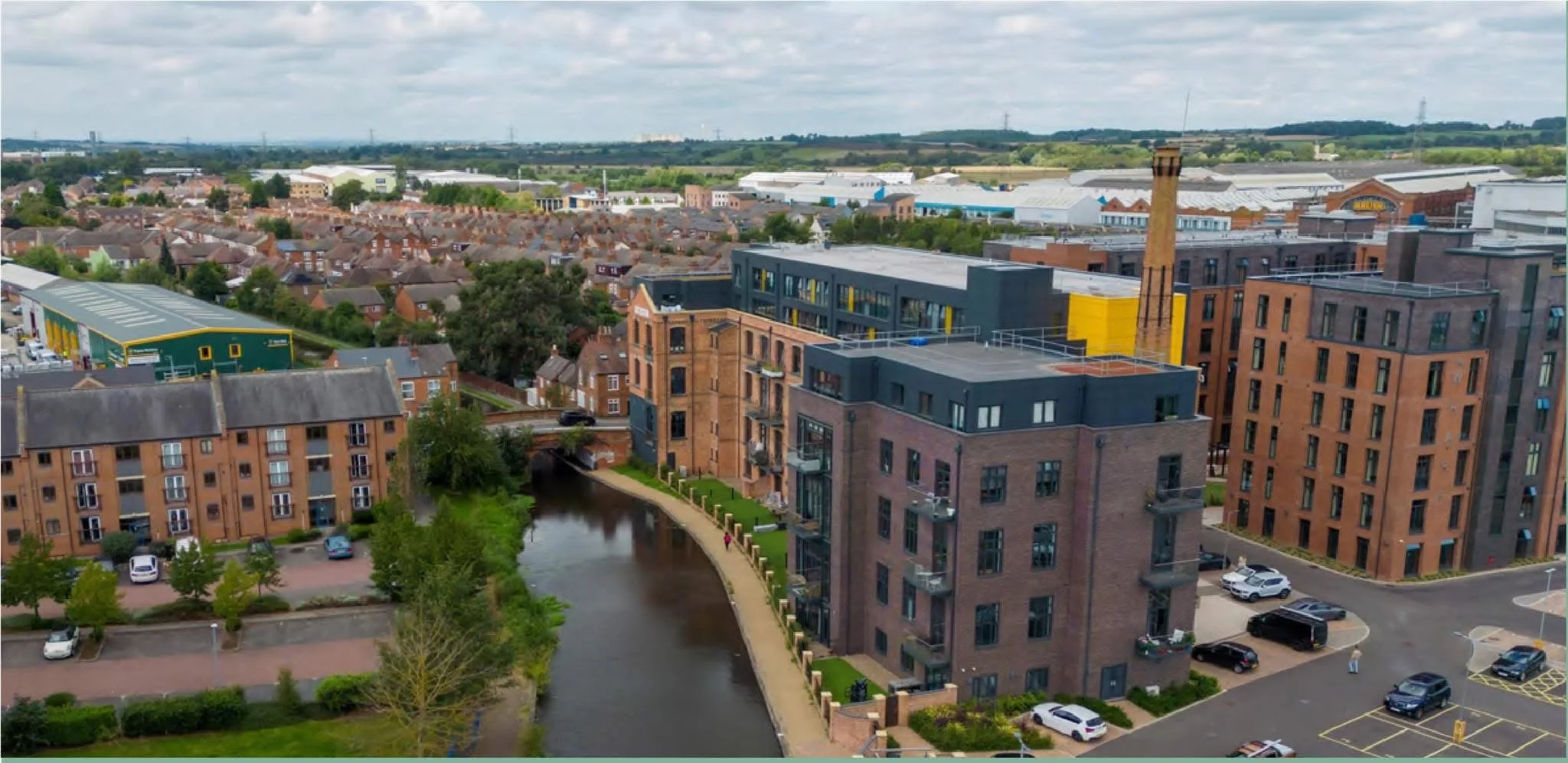
Regeneration programmes only really work when places are trusted with time and power. Thirty years on from joining Leicester’s Urban Programme team for my first job, that is the thread running from City Challenge through New Deal for Communities to the Loughborough Town Deal and now the “Plan for Neighbourhoods”. When government commits for a decade and genuinely co‑creates with communities, the evidence shows deeper, more durable change; when it offers short‑term, project‑by‑project funding, we get new facilities but rarely a new story for the place. As the Town Deal moves towards its final stage in Loughborough I thought I would reflect personally on my journey.
From Urban Programme to Town Deals
When I first started in Leicester’s Urban Programme team in 1988, regeneration felt like a bold experiment in tackling deep‑seated urban deprivation. The focus was on targeted neighbourhoods, often inner‑city areas living with the legacy of deindustrialisation, poor housing and frayed public services, and the tools were still relatively blunt. I was new to the work so only concentrated on doing my job and enjoyed seeing areas ‘spruced up’ (.uwe-repository.worktribe)
The 1990s brought City Challenge and the Single Regeneration Budget (SRB), with highly competitive bidding rounds, glossy prospectuses and a strong expectation of visible, physical transformation. These programmes did help unlock derelict land, refurbish buildings and draw partners around a shared plan, but their short timeframes and competitive design rewarded places that could write strong bids more than those with the deepest problems. Money arrived in waves, often tied to specific capital schemes, and there was little space to build the kind of long‑term relationships and community capacity that later programmes aspired to. Again I was involved as an Officer and then when I got elected I briefly got deeply involved in the SRB in Loughborough as Vice Chair of the Board. Again I was still new to Urban regeneration and learning .uwe-repository.worktribe
By the late 1990s and 2000s, New Labour’s neighbourhood renewal agenda, and particularly New Deal for Communities (NDC), shifted the model. Thirty‑nine NDC areas received around £50 million each over ten years to pursue a holistic vision across crime, community, housing, education, health and worklessness, with local partnerships expected to put residents at the heart of decision‑making. Evaluators later described this as a “transformational” approach precisely because it coupled long‑term funding with neighbourhood‑level co‑governance.extra.shu+3
In government I tried to work with Ministers to ensure regeneration was done with people rather then to them. When you get elected and your future depends on their votes it DOES make a massive difference to how that relationship changes (for the better)
What the evidence actually says
The NDC evaluation remains one of the most robust tests of what long‑term, co‑created regeneration can do. Across the 39 areas, there were improvements in 32 of 36 core indicators between 2002 and 2008, covering crime, education, health, worklessness, community and housing, and the gaps with the rest of the country narrowed on many measures. The programme invested in around 6,900 interventions and levered in a further £730 million from other public, private and voluntary sources, giving a sense of the scale involved.extra.shu+1
Crucially, the evaluation highlights how those gains were achieved. Long‑term, ten‑year funding allowed partnerships to develop a pipeline of projects, adapt as circumstances changed and build the skills and confidence of local organisations, rather than scrambling to spend in short windows. Resident representation on Boards, often alongside local agencies and councillors, brought legitimacy, local knowledge and challenge, even though most residents never sat in a meeting or filled in a survey. The final assessment underlines that community engagement required “consistency, dedication and commitment” over many years, not one‑off consultations.gov+2
Fast‑forward to the 2010s and 2020s and the landscape looks very different. Instead of one flagship programme, we have seen a patchwork of Local Growth Fund rounds, City Deals, Town Deals, the Future High Streets Fund and Levelling Up Fund, each with its own rules, timescales and business case templates. The emerging evaluation of the Towns Fund, which includes both Town Deals and the Future High Streets Fund, suggests that local authorities generally see these funds as helpful to meeting council objectives, and that projects are producing well‑used facilities and amenities. However, the same evaluation notes that evidence of wider, town‑wide changes in pride in place, wellbeing and the local economy is still tentative and incomplete.gov+3 I have seen many of these funds through my volunteering at the LLEP over the years and the subsequent appointment to the Loughborough Town Deal Board as private sector/ LLEP representative. I do early on calling on the Board to do more consultation with residents rather than deciding projects in the Board room. I felt a series of good projects didn’t make the final cut for sound ‘business case reasons’ but these would have had greater buy-in from parts of our community.
Loughborough Town Deal up close
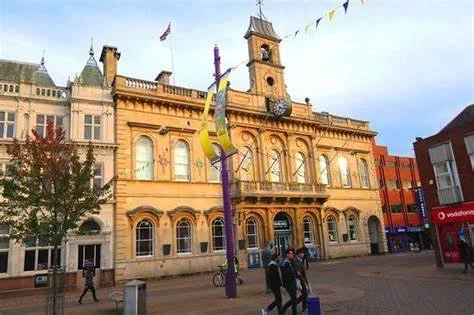
Loughborough Town Centre
Loughborough’s Town Deal sits squarely in this more fragmented era. The town secured an offer of around £16.9 million, ultimately funding 11 projects from an original longlist, with Charnwood Borough Council acting as Accountable Body and an independent Town Deal Board established to oversee strategy and delivery. A Community Engagement and Consultation Group was created to support the Board, with its Chair sitting as a member to bring in local perspectives.charnwood.moderngov+3
Some of the funded schemes will be familiar to anyone who lives or works in the town. The Bedford Square Gateway improvements have reshaped part of the town centre’s public realm. The Generator project is turning a former 1930s building into a creative industries and community hub, aiming to provide space for arts, events and small businesses. Living Loughborough has focused on making the town centre feel safer and more vibrant, through events, lighting, digital trails and other measures designed to improve the experience of being in the town. Other investments include the Wood Brook flood risk scheme to protect homes and businesses, and support for Great Central Railway and John Taylor’s Bellfoundry as heritage and visitor economy anchors.loughboroughtowndeal+2
On paper, this looks like a balanced portfolio across physical improvements, culture, heritage, resilience and town‑centre vitality. Engagement plans talk about surveys, workshops, collaboration with groups like Love Loughborough and project‑level engagement commitments, echoing national guidance on involving communities. And early Towns Fund evaluation case studies indicate that projects centred on community hubs, public realm and local activities are generally well‑received, well‑used and associated with higher satisfaction among users and neighbouring residents.publishing.service+5
Yet from inside the process, it has often felt more constrained than the glossy vision suggests. Within the national rules and compressed timescales, the conversation about “what could we do in Loughborough?” frequently narrowed down to “which projects can we deliver, that pass the Treasury tests, within the window?” rather than starting from an open, community‑led vision of what the town needs over the next decade. Some locally generated ideas were simply not viable: they were too speculative, could not be delivered in time, or did not fit a capital‑heavy funding pot, and there was limited room to develop or pilot alternatives.gov+2
That tension – between wanting to co‑create and having to fit into a rigid programme – will be recognisable to officers and partners across the country. It means that even when engagement is taken seriously, and even when local boards include community voices, the underlying incentives still pull towards safer, “deliverable” projects over more experimental, community‑defined priorities.publishing.service+2
Co‑creation: beyond consultation and pet projects
One lesson from three decades of schemes is that not all “community involvement” is equal. Consultation that simply asks residents to comment on a pre‑determined list of projects can build awareness and occasionally tweak designs, but it rarely shifts power or ownership. Participation in specific projects or forums is better, especially when people can see tangible outcomes, but it can still leave the overall strategy and big trade‑offs in professional or political hands.extra.shu+1
Co‑creation goes further, asking communities to help shape the vision, priorities and solutions from the outset and stay involved through design, delivery and adaptation. NDC partnerships provide some of the strongest evidence that this is worth the effort: resident board members worked alongside agencies to design local strategies and interventions, bringing knowledge of how problems played out on the ground and what might work in practice. While not every experiment succeeded, the process built civic capacity, strengthened local organisations and left many neighbourhoods better able to advocate for themselves after the programme ended.ppp-online+3
However, co‑creation does not mean saying yes to every idea. Some proposals are unaffordable, technically unworkable or misaligned with legal duties, climate goals or long‑term sustainability. The difference is in how those decisions are made and communicated: a co‑creative approach is transparent about the criteria, honest about constraints, and prepared to work with residents to adapt ideas or identify alternative routes when something cannot be funded through the main programme. It treats communities as partners in problem‑solving, not just consultees or lobbyists.gov+1
The emerging Towns Fund evaluation suggests that the most successful early projects, in terms of pride in place and wellbeing, are often those that have embedded this kind of ongoing engagement rather than treating it as a tick‑box exercise. Community hubs which design their offer with local groups, public spaces shaped through iterative engagement, and heritage or cultural projects that programme activities with residents are more likely to be busy, valued and resilient. That aligns with day‑to‑day experience in Loughborough and elsewhere: when people feel they have helped to design something, they are much more likely to use it, defend it and build on it.gov+2
Time: the missing ingredient
If co‑creation is one pillar of successful regeneration, time is the other. NDC’s ten‑year horizon, coupled with significant, flexible funding, allowed partners to invest in both “hard” and “soft” infrastructure, take calculated risks and learn from mistakes without fearing that one setback would sink the programme. The Plan for Neighbourhoods, the government’s new £1.5 billion initiative for 75 “left behind” areas, explicitly acknowledges this, citing NDC as evidence that long‑term funding helps build a pipeline of projects and entrenched improvements in local capacity.northlincs+2
Under Plan for Neighbourhoods, each selected area will receive up to £20 million over ten years, with Neighbourhood Boards overseeing a locally developed regeneration plan and a more detailed investment plan for the first four‑year period. The prospectus talks about “no more sticking plasters; no more short‑term fixes” and emphasises that long‑term funding underpins a shared vision, better strategic alignment and stronger community capability. In other words, central government is, at least on paper, rediscovering what NDC had already demonstrated: that ten‑year commitments create the conditions for meaningful change.northlincs+2
By contrast, Town Deals and similar funds have been hampered by tight delivery deadlines, shifting guidance and external shocks such as inflation and supply‑chain delays. Local authorities tell evaluators that the funding has enabled important projects, but also that juggling multiple programmes with different rules has increased complexity and squeezed the time available for deep engagement and iterative design. In that context, it is not surprising that many places, including Loughborough, found themselves trimming ambition and focusing on what could be delivered safely within the window.charnwood.moderngov+3
From a thirty‑year vantage point, the conclusion is hard to avoid: regeneration that is constantly rebranded, rebid and re‑profiled around the Treasury’s spending reviews will struggle to build the trust, capacity and relationships required for lasting change. Long‑term commitments, like NDC and now Plan for Neighbourhoods, give communities and partners the confidence to invest their time and energy, to learn together and to stay the course when early results are slow or uneven.extra.shu+2
Lessons for the next generation
So what should policymakers, councillors and regeneration partners take from this history as Town Deals wind down and the next wave begins?
First, design for a decade, not a spending round. Programmes that offer ten‑year funding with stable rules and room to adapt, such as NDC and Plan for Neighbourhoods, have a stronger track record of narrowing gaps and building local capacity than short‑term pots. Fewer, longer programmes would reduce the transaction costs for councils and partners, and allow officers to spend more time in communities and less time writing bids.extra.shu+3
Second, hard‑wire co‑creation into governance and delivery. Boards and partnership structures should give community representatives real influence, not just observer status, and be supported by properly resourced engagement and community development work. The evidence from NDC and early Towns Fund case studies suggests that when residents help shape strategies and projects from the start, facilities are better used and changes are more likely to stick.gov+4
Third, be honest about constraints and viability. Not every local idea can or should be funded through a major regeneration programme, but communities deserve open criteria, transparent trade‑offs and genuine help to explore alternatives when something is not possible. That kind of honesty can actually strengthen trust, especially when residents can see how their input has changed priorities or designs, even if not every wish is met.gov+4
Finally, protect the social infrastructure alongside the physical. Evaluations consistently highlight the role of local organisations, networks and community hubs in sustaining progress after the funding ends. Capital projects in places like Loughborough—new public spaces, cultural venues, flood schemes—create platforms, but it is the people and organisations using them that turn investments into lived change.publishing.service+6
From Leicester’s Urban Programme in 1988, through City Challenge and New Deal for Communities, to the Loughborough Town Deal and Plan for Neighbourhoods, the story is remarkably consistent. When programmes are short‑term, centrally driven and project‑led, they can deliver visible improvements but struggle to change the underlying trajectory of a place. When government trusts places with time and shares power through genuine co‑creation, communities respond with energy, creativity and resilience – even if, as practitioners know, that means living with the messiness and compromise that real partnership always brings.publishing.service+6
https://extra.shu.ac.uk/ndc/downloads/general/A%20final%20assessment.pdf
https://extra.shu.ac.uk/ndc/downloads/general/A%20final%20assessment%20-%20Executive%20summary.pdf
https://assets.publishing.service.gov.uk/media/5a7f220aed915d74e622896a/NDCevaluationphase2_0315.pdf
https://www.northlincs.gov.uk/jobs-business-and-regeneration/plan-for-neighbourhoods/
https://www.eddisons.com/insights/plan-for-neighbourhoods-regeneration-plans